Grading standards
Science, not
opinion.
At AGS, each card is carefully analyzed using our proprietary RoboGrading AI system. This process combines advanced imaging, laser scanning, and artificial intelligence to ensure accuracy, consistency, and transparency.
The 4 pillars of grading
Centering
Measured to the micron. We analyze the exact ratio of borders on both front and back.
Surface
Detects scratches, print lines, and imperfections invisible to the naked eye.
Edges
Checks for whitening, chipping, and cutting irregularities along the card perimeter.
Corners
Evaluates the sharpness and wear of all four corners at high magnification.
Front Analysis (60%)
Back Analysis (40%)
Understanding RoboGrading AI
Centering Model
- •Uses object detection to isolate borders.
- •Measures symmetry, angles, and distances.
- •Evaluates consistency across the entire face.
Defect Model
- •Uses semantic segmentation for imperfections.
- •Detects whitening, scratches, creases, etc.
- •Produces precise defect maps via laser data.
Grading Model
- •Combines data to assign subgrades.
- •Evaluates defects based on size, depth, location.
- •Deducts based on % of pixels damaged.
Note on Annotations: Not every minor defect is visually annotated. The AI detects defects at the pixel level and factors them into the score even if not explicitly marked on the report.
Defect classifications
Wear from normal handling. Corner wear, surface scratches, light scuffs. No deep dents.
Discoloration, stains, liquids, slight bends. May trigger manual overrides.
Severe damage. Creases, foreign substances, extensive liquid exposure. Manually reviewed.
Special cases & qualifiers
Vintage Cards
Cards pre-2016 receive a 1–5% adjustment boost to account for systematic printing inconsistencies.
Crease Override
Single crease <1" caps grade at 5 (EX). >1" or multiple creases cap at 4 (VG-EX).
Error Cards
Authentic misprints are not penalized. Grade capped at 9. Labeled "ERROR".
Harsh Overrides
Major dents/bends cannot exceed 8 (NM-MT). Front dents capped at 7 (NM).
Ink or writing. Max grade 8.
Misaligned borders. Centering subgrade <6.
Factory imperfections. Severe ones prevent 10.
Cut incorrectly during manufacturing.
Trimmed, recolored, or cleaned. No numeric grade.
The AGS scale
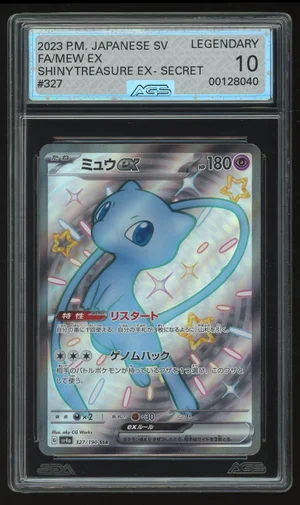
An AGS 10 Legendary card epitomizes perfection. All eight subgrades are 10. Edges and corners are sharp and void of defect. The surface is absolutely flawless. Centering is perfect (50/50 to 55/45). This grade is extremely rare.
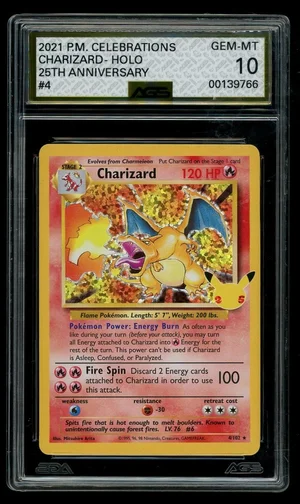
A flawless card. No visible defects, nearly perfect centering (55/45 to 60/40), sharp edges and corners. Minor imperfections may be acceptable if it doesn't limit overall appeal. Most subgrades are 10s.
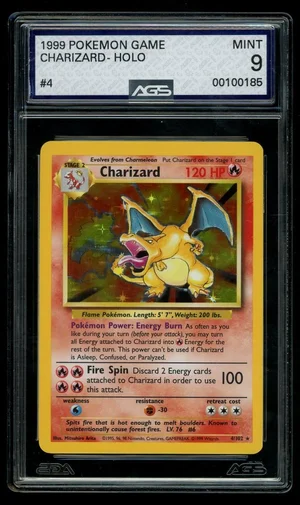
Outstanding card. May have minor defects on edges, corners or surface along with more lenient centering. typically perfect save one moderate or set of minor flaws.
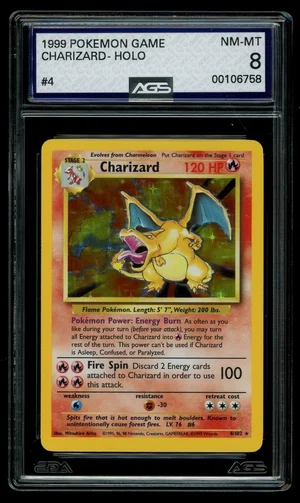
Top-notch card with more visible damage on first inspection. May have moderate whitening, scratches, a couple of print lines, or some staining.
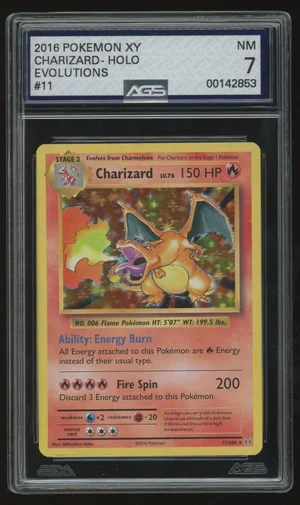
Surface wear visible upon inspection with possible fraying on corners. Overall appeal is maintained; no creases or major damage.
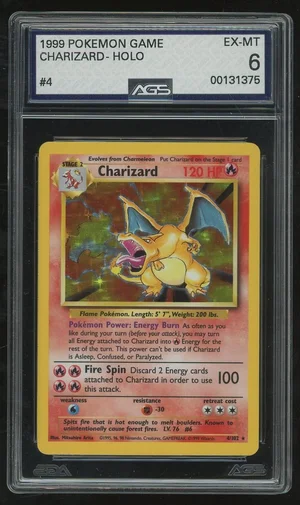
Visible surface wear or a printing defect. Corners may have slightly graduated fraying. Light notching and staining are allowed.
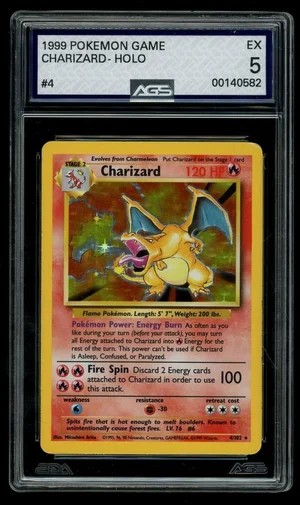
General wearing of corners starting to emerge. Surface wear/defects more noticeable. Minor chipping along edges. Original appeal may show signs of fading.
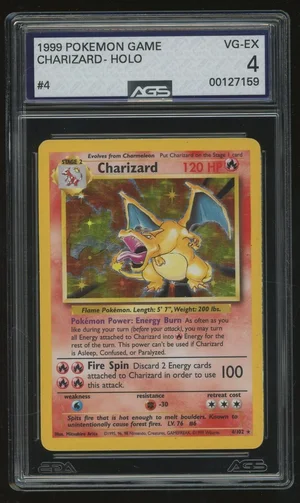
General wearing of corners. Surface wear noticeable but not extensive. Light scuffing or scratches. Borders may exhibit slight off-white tint.
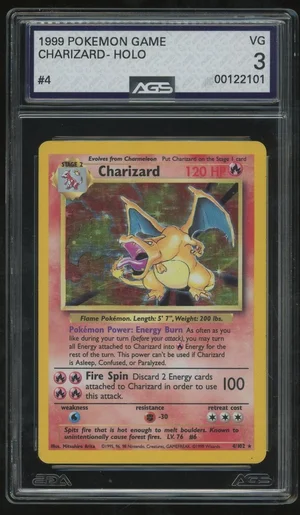
Corners show wear. Surface wear evident with scuffing/scratches. Image focus may be off-register. Borders may display yellowing. Visible crease possible.
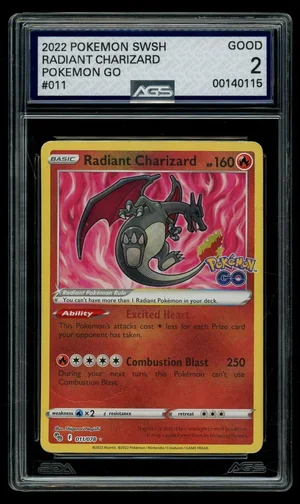
Accelerated wearing of corners. Significant surface wear (scratching, scuffing, staining). Multiple creases possible. Original gloss may be absent.
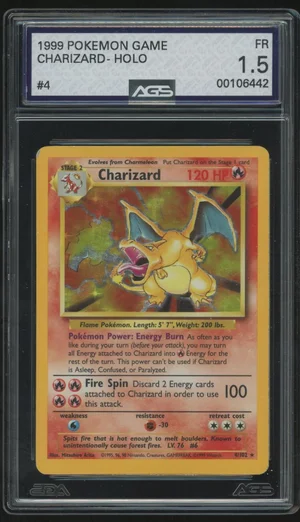
Extreme wear. Advanced stages of scuffing, scratching, pitting, chipping. Picture out-of-register, borders brown/dirty. Heavy creases. Must remain intact.
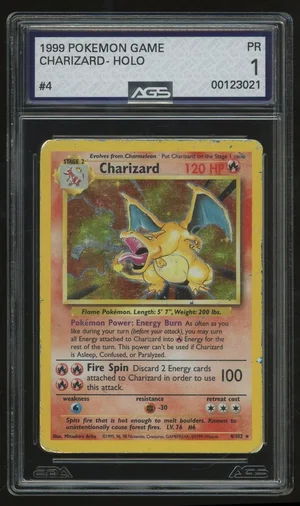
Similar to 1.5 but defects more serious. May miss small pieces, display major creasing breaking layers, or extreme discoloration. Eye appeal nearly diminished.
Our commitment to consistency
At AGS, transparency is at the core of everything we do. Every grade is supported by laser-accurate data, detailed analysis, and a clear set of grading principles. Our hybrid process — AI precision with expert review — guarantees that each card is evaluated fairly, consistently, and with the integrity collectors can trust.